
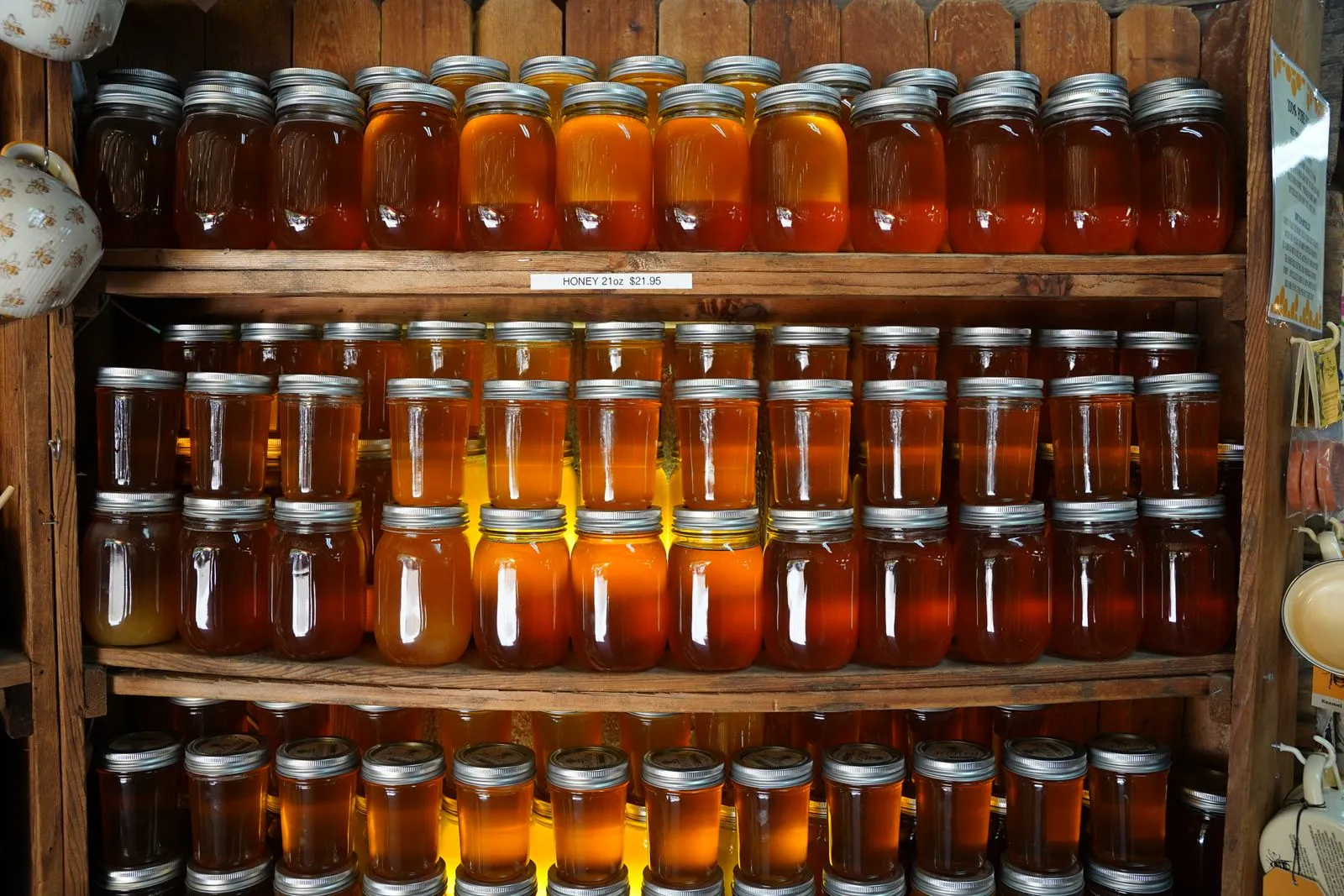
Honey is easy to store, but a few small habits help preserve its flavor and keep it convenient to use. Choose a cool, dry place away from direct sunlight, and close the lid securely after each use. Over time, honey may turn cloudy or develop crystals. That change is natural and does not mean the honey has spoiled. With gentle warming, you can return crystallized honey to a pourable texture without exposing it to excessive heat.
Choose a Dry, Steady Storage Spot
Keep honey in a tightly closed container in a cupboard or pantry, away from sunlight, heat sources, and damp areas. Room-temperature storage works well; refrigeration is unnecessary and can encourage honey to crystallize sooner. Avoid storing the jar beside an oven, on a sunny windowsill, or in a location where temperatures change frequently.
Moisture is the main storage concern. Always use a clean, dry spoon, and wipe honey from the rim before replacing the lid. Water introduced into the jar can dilute the honey and may contribute to fermentation. If honey comes in a container that does not seal well, transfer it to a clean, dry jar with a secure lid.
Understand Crystallization
Crystallization happens when glucose, a natural sugar in honey, separates from the liquid and forms crystals. The speed and texture vary with the honey’s floral source, its composition, and storage conditions. Some honey stays liquid longer, while other honey becomes grainy or firm relatively quickly. Cloudiness, a thicker texture, or visible crystals are normal signs of this process.
Crystallized honey is generally safe to eat and retains its character. You can spread it as it is, stir it into warm food, or gently soften it. Do not discard honey just because its texture has changed. If you notice an unusual fermented smell, foaming, or other signs that concern you, avoid tasting it and check with the producer.
Soften Honey Gently
For a small jar, place it in a bowl of warm—not boiling—water. Keep water below the lid, and let the jar sit until the crystals soften. Stir occasionally with a clean, dry utensil. Replace the warm water if it cools before the honey reaches the texture you want. Remove the jar and dry its exterior before opening it to keep water away from the honey.
You can also transfer a portion to a heat-safe container and warm it gently in short intervals, stirring between each one. Avoid high heat and prolonged heating, which can change honey’s flavor and aroma. Never put a sealed glass jar in boiling water or heat it directly on a stovetop. If you only need a spoonful, stirring it into a warm drink or dish is often simplest.
Keep Honey Easy to Use
A clean, dry container and a secure lid are usually all honey needs. Labeling the jar with its variety or purchase date can help you keep track of what is in your cupboard, especially if you enjoy several types. Store each jar away from strong odors, since honey can pick up surrounding aromas over time.
If you prefer liquid honey, soften only the amount you plan to use rather than repeatedly heating the whole jar. Crystallization may return as the honey cools, and that is normal. Gentle warming can be repeated when needed; steady, dry storage helps limit unwanted moisture and keeps the honey ready for everyday use.
Store honey sealed in a cool, dry cupboard, and treat crystallization as a normal change rather than spoilage. When you want a smoother texture, use warm water or brief, gentle heating and keep moisture out of the jar. For locally harvested honey and storage questions, contact Savannah Honey Co.